
phd TALK + WORKSHOP
As you go... the roads under your feet, towards the new future by BILJANA CIRIC
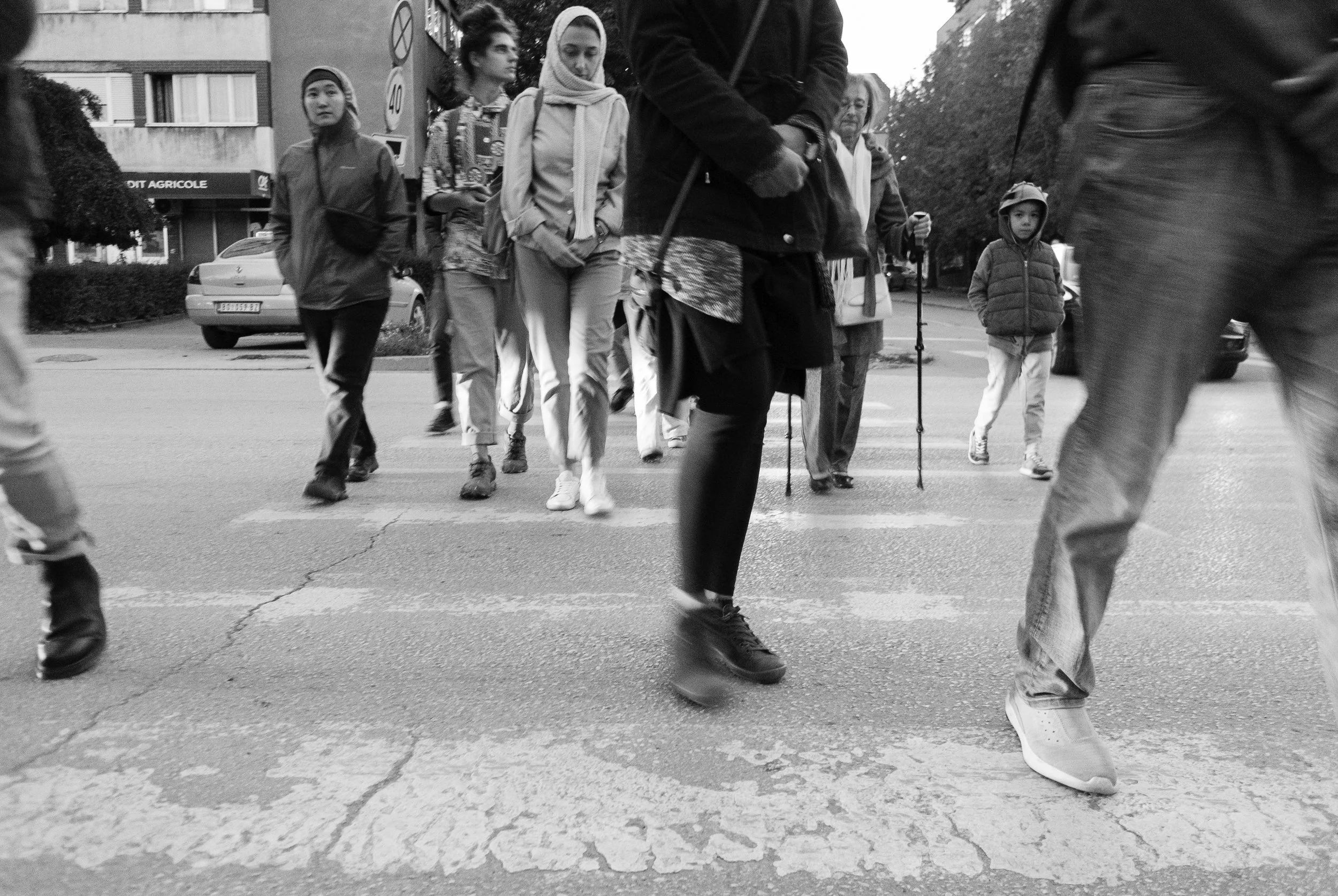
Robel Temesgen. Mourning Performance, 2022. Image courtesy of WCSCD
SYLLABUS
As you go… the roads under your feet, towards the new future (2019–22) was a four-year curatorial research inquiry with partner cells based in Central Asia, China, the Balkans and East Africa, that I initially developed in response to the geo-political framework of China’s Belt and Road Initiative (BRI). As you go… was a group of research cells including independent art practitioners, small-scale organisations and major state or private museums, invited by me after a series of initial site visits to the regions. While we learnt about the BRI’s impact together, we also learnt from, with and about each other via a long-term process of ‘walking-with’ each other, which included regular meetings, intensive workshops and seminars. We also learnt how to speak nearby (more than about) China, but also how to speak nearby each other, as we searched for ethically and economically sustainable modes of working within a transnational multi-year inquiry whose partners have access to different levels of resources. The inquiry encompassed two physical encounters, each on either side of the COVID -19 global pandemic: one in Addis Ababa, Ethiopia in 2020 and another in Bor, Serbia in 2022. It also includes the As you go… online journal, an online symposium held in 2021 and a publication in Throughout As you go…I practiced curatorial gestures informed by feminist and decolonial thinking, Indigenous science fictions imaginaries and epistemologies of the South. But my curatorial approach was just as informed by my partner cells: their knowledge, contexts and perspectives, as well as things they said and did, or things they didn’t say or do. These curatorial gestures remained dynamic and attuned to the needs of the partner cells, as we learned to walk with each other during difficult years for all of us marked by factors including the pandemic, and the social brought with it, as well as economic struggles and political violence. We co-created relational spaces where we listened to and attended to differences as well as changing conditions of the everyday. These ways of working together are methods developed during this practice-led curatorial research, but they are also ways of working that allowed our differences to coexist and relationships to be built that, I hope, go beyond the logic of the immediate project, towards the logic of relationships that we truly need and want to continue to be part of our lives moving forward. This practice-based research teases out other threads of interest: tensions between margins and centres, a balance between opacity and visibility, undervalued curatorial and artistic gestures, embracing failure as a learning process, proximity as a condition for knowledge production, and how these knowledges are disseminated locally and globally. These questions emerged as core to the curatorial ethics, responsibilities and sensibilities engaged in this research.